
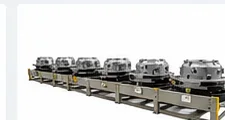
Part flow drives system architecture
We map the load, clamp, blast, blow-off, unload and inspection sequence before finalizing the automation. This prevents the blast machine from becoming fast while the operator is still waiting on a difficult load/unload step.
Handling options
Powered roller and belt conveyors.
Servo or gearmotor turntables.
Indexing tables for multi-station processing.
Custom nests, clamps and masking fixtures.
Lift assists, carts and transfer devices for large parts.
Designed for abrasive environments
Components exposed to abrasive dust need guarding, sealing and service access appropriate to the environment. Sensors, bearings, drives and cable routing are selected and located with long-term maintainability in mind.
Frequently Asked Questions
Can the conveyor pass through the blast chamber?
Yes, when the conveyor and seals are designed for the abrasive environment and the process can maintain containment.
Can fixtures be changed for different parts?
Yes. Quick-change or keyed fixtures can be combined with recipe selection so the HMI guides the operator to the correct setup.
Can handling be added later?
Sometimes, but planning the future load/unload strategy during the initial system design avoids expensive enclosure and control changes later.