
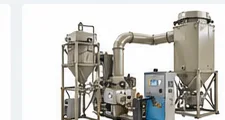
Why automation changes the supporting equipment
Automated systems can run longer cycles and more hours per shift than a manual process. That increases abrasive circulation and dust loading. Collector airflow, filter cleaning, separator capacity and waste handling must be evaluated against the new duty cycle.
Integration points
Collector running status and differential pressure alarms.
Media level sensing and low-level warnings.
Interlocks that prevent blasting without required airflow.
Timed or condition-based filter cleaning.
Maintenance alarms and service-hour counters.
Cleaner data, fewer surprises
When supporting equipment is connected to the PLC/HMI, operators can see whether a production stop comes from the robot, blast process, collector or recovery system. That diagnostic visibility reduces troubleshooting time.
Frequently Asked Questions
Can we reuse an existing dust collector?
Possibly. Airflow, static pressure, filter area, dust loading, condition and code requirements should be reviewed against the automated duty cycle.
Should dust collection be controlled by the PLC?
At minimum, the cell should monitor required collector status and safety conditions. Deeper integration can add alarms, filter status and maintenance information.
Does media recovery affect finish consistency?
Yes. Effective separation and recovery help control the mix of usable abrasive, fines and contaminants returning to the blast process.