
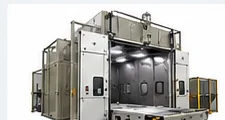
Automating the room, not just the nozzle
Large-part automation usually requires coordinating the blast process with how the part enters, rotates, indexes and exits the room. That is why material handling, safety zoning, ventilation and media recovery are engineered together rather than treated as separate accessories.
Typical applications
Structural fabrications and weldments.
Castings, forgings and heavy-equipment components.
Rail, transportation and energy components.
Large production parts that currently require multiple manual operators.
Keep manual capability when it adds value
Some operations benefit from a hybrid room with both automatic and manual modes. The system can automate repeatable production while preserving a safe manual station for prototypes, touch-up or low-volume work.
Frequently Asked Questions
Can a blast room be automated with a robot?
Yes. Robot reach, blast hose management, abrasive environment protection and service access must be considered in the design.
Can the room still be used manually?
A hybrid design can support both modes when the safety system and ventilation are engineered for each operating state.
Does blast-room automation require automatic media recovery?
Not always, but production automation usually benefits from a recovery system sized for the abrasive flow and duty cycle to reduce manual cleanup and maintain process consistency.