
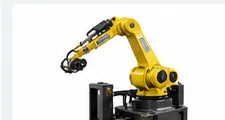
Robot integration is more than mounting an arm
The robot path is only one part of the cell. Abrasive hose routing, fixture access, dust, blast interlocks, maintenance access, part loading and safety zones determine whether the machine is reliable in production.
Nozzle or part manipulation
A robot can carry the nozzle, or it can manipulate a lighter workpiece in front of fixed nozzles. The better approach depends on payload, cycle time, reach, hose forces and how many surfaces need to be presented.
Controls and recipe coordination
The PLC can select robot jobs, verify fixtures, manage blast permissives and coordinate auxiliary axes. A single HMI gives the operator a common view of the entire system rather than separate islands of automation.
Frequently Asked Questions
Does robotic blasting always reduce cycle time?
Not always. Its biggest value may be repeatability, labor reduction or flexibility. Cycle-time improvement depends on the current process and required coverage.
Can robot paths be changed for new parts?
Yes. New recipes and robot programs can support additional parts within the mechanical limits of the cell.
Is offline robot programming possible?
It can be included when appropriate, but final process tuning and validation should still be performed against real parts and blast results.